
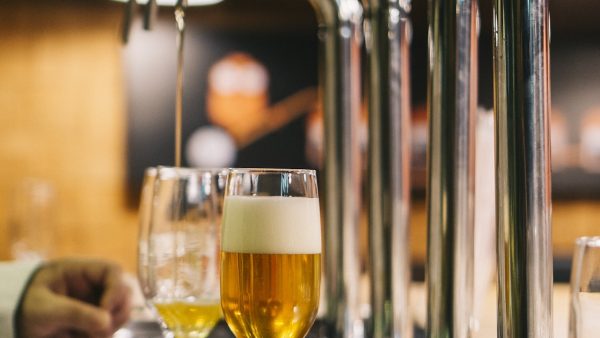
Something has shifted in how American craft breweries make money — and if you’ve noticed your local taproom getting a little nicer, a little busier, or a little more focused on the on-site experience, you’re picking up on a real trend reshaping the industry.
For years, the growth model for most craft breweries ran through distribution: brew it, package it, sell it through wholesalers to bars and bottle shops, repeat. That model still works for the big regional players. But for the vast majority of the country’s small and mid-sized breweries, the taproom has quietly become the financial engine — and increasingly, the whole point.
The math is straightforward. A brewery selling a pint in its own taproom captures the full retail margin. The same beer sold through a three-tier distribution chain means the brewery takes home a fraction of that. When you factor in the shelf-space competition from hundreds of competitors and the volatility of wholesale accounts, the taproom starts to look less like a nice-to-have and more like the only model that makes sense at a certain scale.
The downstream effects are visible everywhere. Taprooms are adding kitchens, live music, trivia nights, private event spaces. Breweries in smaller markets are investing in outdoor beer gardens and family-friendly amenities that extend dwell time and draw non-beer-drinkers into the fold. Some are adding coffee programs, retail merchandise, and even coworking space. The beer is still the anchor, but the experience around it has become the real product.
This shift has implications for beer culture beyond the balance sheet. Taproom-focused breweries brew differently — more variety, smaller batches, more willingness to experiment — because they’re selling directly to customers who are there specifically to try something new. It’s one reason the sheer diversity of American craft beer has kept expanding even as overall industry growth has flattened.
Why It Matters: Taproom revenue is now the primary economic engine for most small breweries — which means supporting your local taproom is the most direct way to keep it alive.
The Trend: Expect more breweries to invest heavily in the on-site experience — food, events, and amenities — over the next several years.
The Catch: Breweries increasingly dependent on foot traffic are more exposed to local economic conditions and less insulated by distribution revenue.
The taproom economy isn’t a fad — it’s a structural realignment. The breweries that figure out how to make their physical space genuinely worth visiting are the ones most likely to still be pouring a decade from now.


Leave a Reply