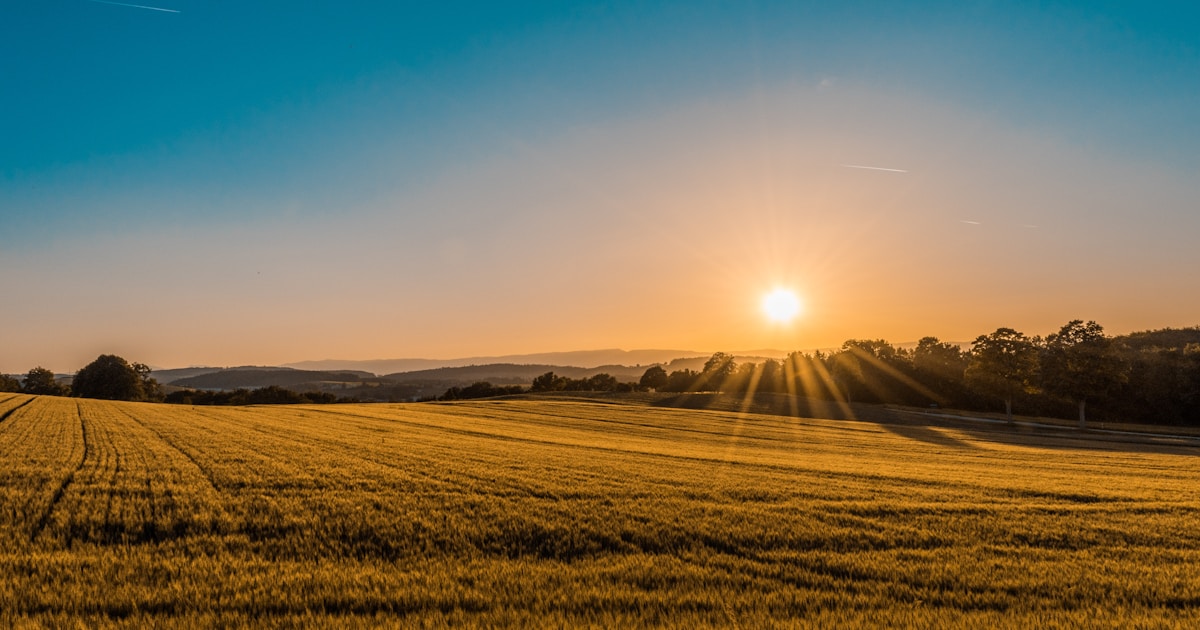
The craft beer industry has a climate problem, and it runs straight through the raw materials. Barley, hops, and water — the three non-yeast building blocks of every beer — are all facing documented pressure from shifting weather patterns, and the people who grow and brew them are increasingly having to adapt in real time.
Barley is acutely vulnerable. The grain requires a relatively narrow band of growing conditions — cool nights, dry harvests, and enough moisture earlier in the season to build the starch content that makes it useful for malting. In the traditional growing regions of the Northern Plains and the Pacific Northwest, those conditions are becoming less reliable. Drought years reduce yields. Early heat spikes affect starch development. Wet harvests increase the risk of mycotoxin contamination that can make entire crops unusable.
Hops face similar pressure. The Yakima Valley, which produces the majority of American hops, has seen growing season temperatures creep upward, with implications for both yield and the aromatic compound profiles that make different hop varieties distinctive. Some varieties are moving to higher elevations. Breeding programs are working to develop more heat-tolerant cultivars. But the pace of adaptation is being tested by the pace of change.
Water is perhaps the most acute concern. Brewing is a water-intensive process — it takes roughly five to seven barrels of water to produce one barrel of beer when you account for cleaning and cooling — and many brewing regions draw on aquifers and snowpack-fed rivers that are under increasing stress. Some breweries in the American West have begun investing seriously in water reclamation and recycling systems, both from environmental conviction and straightforward operational necessity.
The industry’s response has ranged from serious to symbolic. A growing number of breweries are pursuing carbon neutrality, solar power, and spent-grain reuse programs. The Brewers Association has published sustainability benchmarking tools. New Belgium, Sierra Nevada, and a handful of others have been genuinely aggressive about reducing their operational footprint.
Most Vulnerable: Barley malt supply and hop aromatic profiles are both showing measurable climate-related stress.
Leading the Response: New Belgium, Sierra Nevada, and Allagash have invested most seriously in sustainability infrastructure.
Watch For: Expect ingredient price volatility and potential flavor profile shifts in established hop varieties over the next decade.
The beer in your glass has a supply chain, and that supply chain has a climate. The industry is paying attention — the question is whether it’s paying attention fast enough.




Leave a Reply