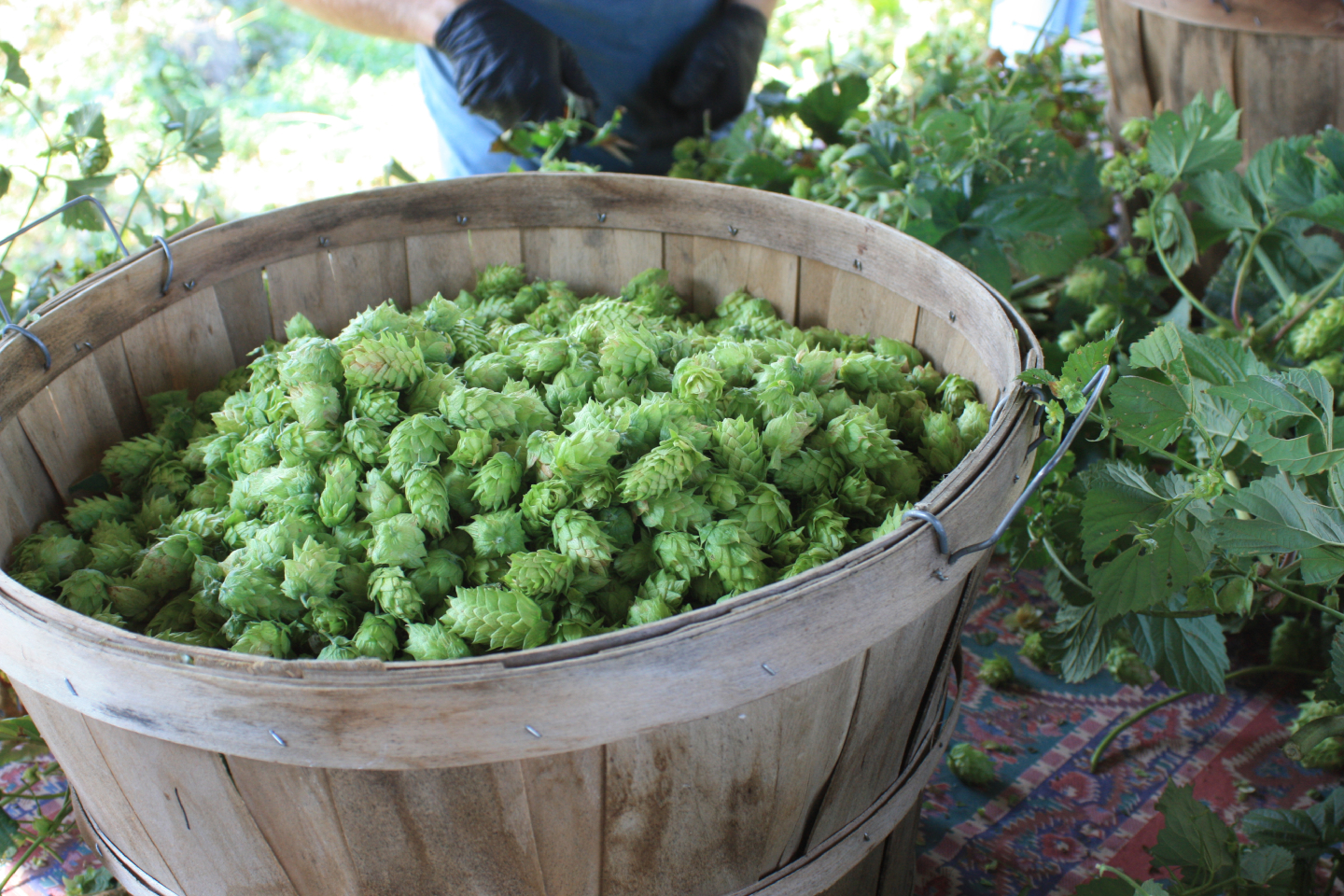
Every September, a narrow window opens in the Yakima Valley of Washington, the Willamette Valley of Oregon, and the hop-growing regions of Michigan and Idaho. The harvest is on. For a few weeks, the agricultural machinery that has been sitting idle all year runs around the clock, and the fresh hops that have been climbing their 18-foot trellises all summer are cut, dried, pelletized, and sent to breweries across the country. It happens fast, and the beer you’ll drink for the next twelve months depends on how well it goes.
The United States produces roughly 80% of the world’s hop supply, with Washington State alone accounting for about 75% of domestic production. Yakima Valley is the center of gravity — a high-desert agricultural region whose combination of soil, irrigation water from the Cascade snowpack, and long summer days turns out to be nearly ideal for hop growing. The region produces Cascade, Citra, Simcoe, Centennial, Mosaic, and dozens of other varieties that define the flavor profile of American craft beer.
Wet hop and fresh hop beers — made with hops used within 24 hours of harvest, before they’re dried — have become a seasonal ritual for craft beer enthusiasts. Breweries often partner directly with hop farms to get same-day delivery, and the results have a grassy, green, intensely aromatic character that pellet hops simply can’t replicate. If you’ve never tried a fresh hop IPA in September or October, it belongs on your list.
The industry’s hop sourcing has grown significantly more sophisticated over the past decade. Forward contracts between breweries and hop farms lock in supply years in advance. Proprietary varieties developed through breeding programs at university research stations give breweries exclusive access to new flavor profiles. The hop supply chain is now as strategically important to a major craft brewery as malt sourcing or yeast management.
Peak Season: Fresh hop beers hit shelves in September and October — grab them when you see them, they don’t last.
Key Region: Yakima Valley, Washington — roughly 75% of all U.S. hop production comes from this single valley.
What to Look For: Any label that says “fresh hop,” “wet hop,” or “harvest ale” between September and November.
Hop harvest season is one of the most genuinely exciting moments in the craft beer calendar. The beers are ephemeral, the flavors are unlike anything else, and for a few weeks every fall, the connection between the farm and the glass is impossible to ignore.


Leave a Reply