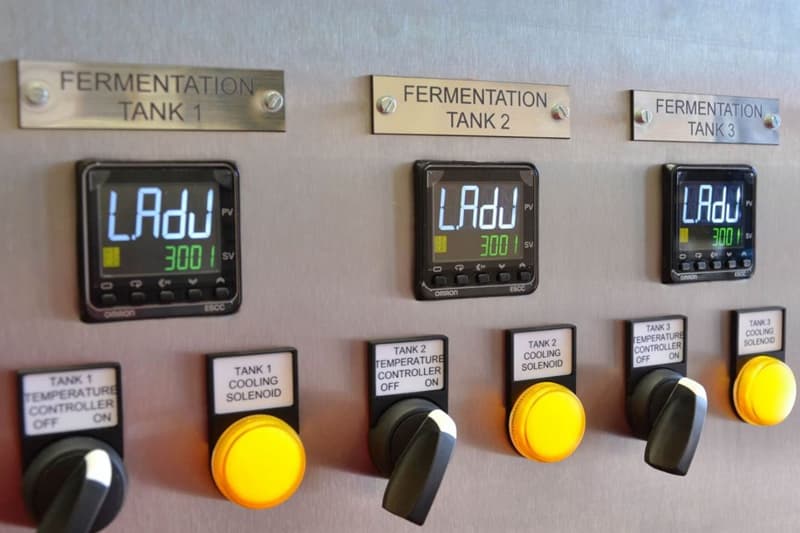
You can have perfect grain, perfect hops, and healthy yeast — and still make mediocre beer if you don’t control fermentation temperature. It’s the variable that separates good homebrew from great homebrew, and it’s the one most beginners overlook until they’ve made a few batches that taste “off” without knowing why.
When yeast ferments too warm, it produces excessive fusel alcohols — the hot, harsh, almost paint-thinner quality you’ve probably tasted in a bad homebrew. It also generates elevated ester levels, making your beer smell and taste more fruity than intended. Too cold and fermentation stalls, leaving residual sweetness and potentially stressed yeast that produces sulfur compounds.
The solution doesn’t have to be expensive. The classic homebrewer approach: a chest freezer + temperature controller (like an Inkbird or Ranco). For around $100–$150 total, you have a fermentation chamber that holds temperature to within half a degree. A probe in the fermenter or taped to the outside gives you accurate readings.
No budget for a chest freezer yet? Get creative. A water bath — your fermenter sitting in a tub of water with frozen water bottles swapped in periodically — can hold temperature remarkably well in warm weather. A cool basement corner in summer often stays in range for ales. Wherever you ferment, monitor the temperature. Knowledge is the first step.




Leave a Reply